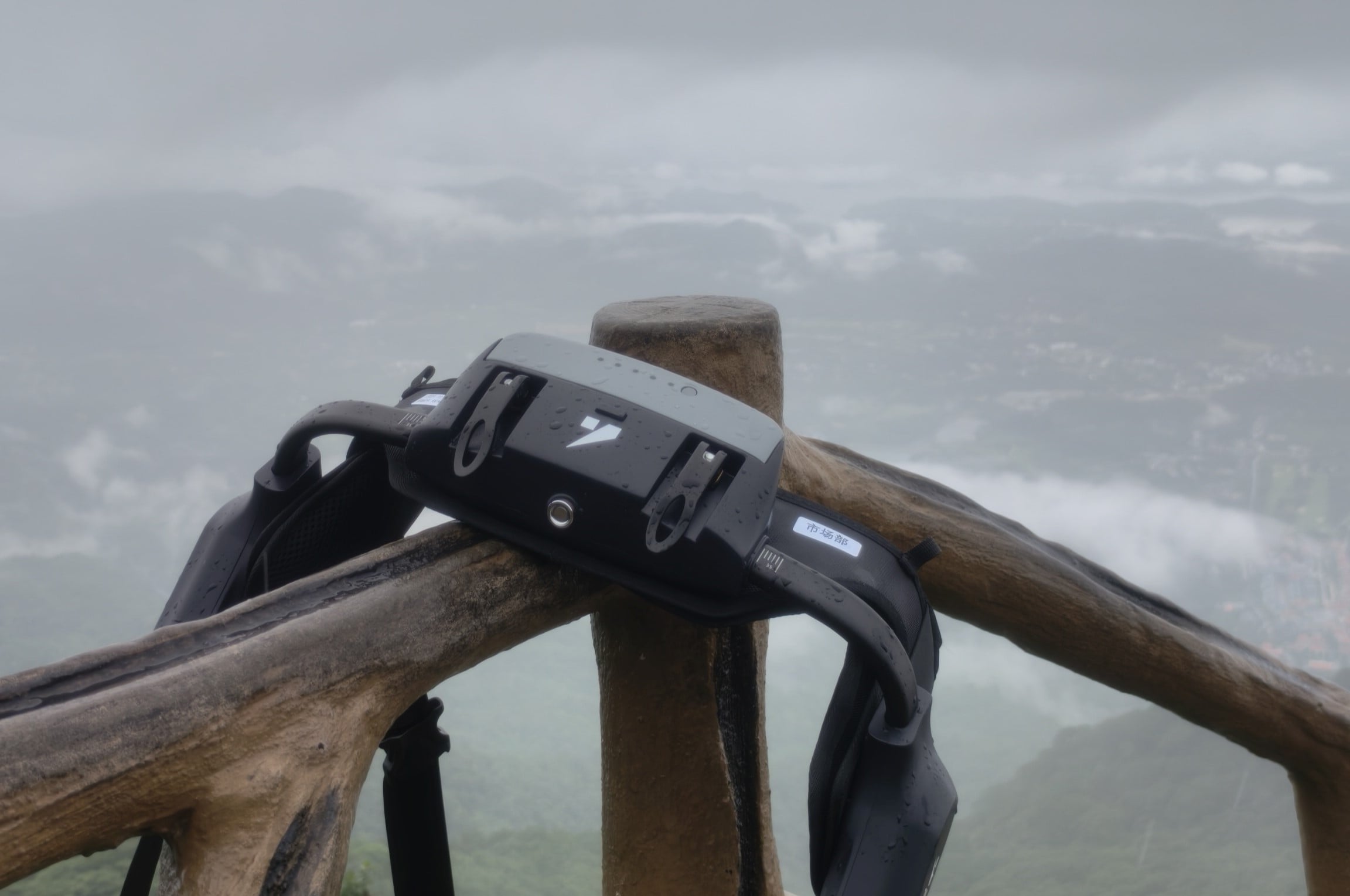
Plankexa AI екзоскелет — Полеви изпитателен доклад за планината Луофу
Time : 2026-07-24
Днес нашата четиричленна екипажа — нашият ръководител Синтянь, двама мъжки колеги и аз, единствената жена в този изпитателен екип — тръгнахме на експедиция към планината Луофу в Хуйчжоу.
Това не беше обикновено пътешествие. Имахме конкретна мисия: да изпробваме в реални условия помощния робот-екзоскелет с изкуствен интелект, разработен от нашия екип.
01 Планирано изпитание, превърнало се в неочакван предизвикателство
Планината Луофу, от векове славена като „Най-добрата планина на Лингнан“, има връх Фейюнь — нейния главен връх на 1296 метра над морското равнище — и безкрайна, извиваща се стълба, която се губи в далечината. Тя е идеално изпитателно поле за издръжливостта и волята на всеки планинар.
За нас тя беше още повече: естествена лаборатория за оценка на производителността на Plankexa AI екзоскелета в реални, сложни планински терени.
Когато тръгнахме в 9 часа сутринта, прогнозата вече предвиждаше дъжд. Пристигайки до началото на пътеката, вдигнахме поглед и видяхме върховете наполовина скрити в тънка мъгла. Разменихме си разбиращ поглед — планът оставаше непроменен. Това щеше да е идеалната възможност да изпробваме стабилността и помощта на устройството по мокри и непредсказуеми терени.
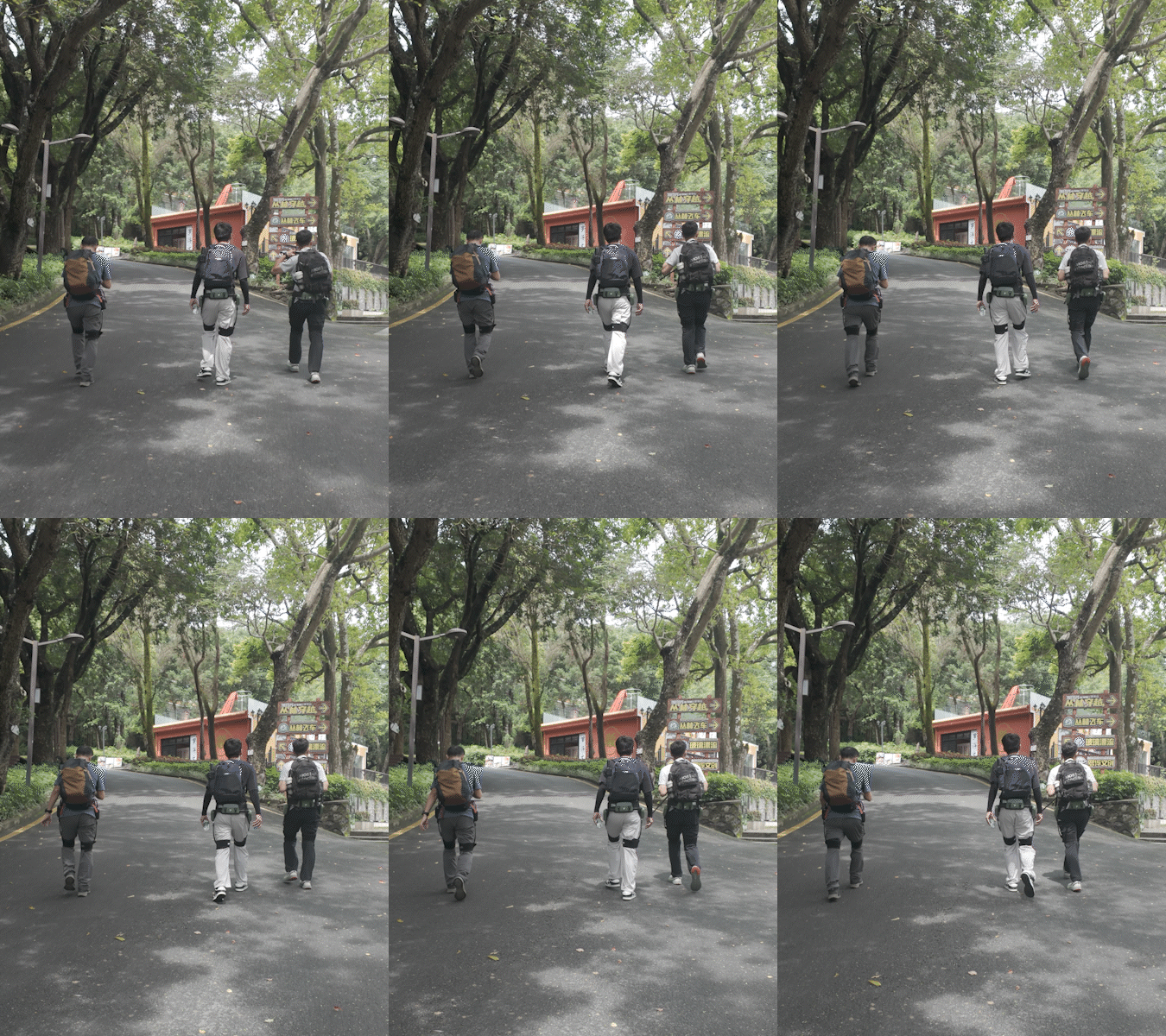
Всеки от нас облече своята „черно-технологична“ екипировка — роботизирания екзоскелет Plankexa AI. Лек и прилепващ, след включването му ясно усещаш повдигаща сила в краката си. Изкачването по стълби особено предизвикваше забележително усещане, сякаш краката ти се повдигат за теб.
Екзоскелетът Plankexa AI предлага шест регулируеми нива на помощ, което позволява на всеки от нас да нагласи настройката според собствените си нужди по време на изкачването към върха.
02 Първият участък: Веднага усещане на разликата
Синтянь водеше пътя с устойчиви крачки и от време на време се обръщаше назад, за да провери как са всички. Двамата ни колеги вървяха плътно зад нас. Докато се изкачвахме, разменяхме данни за реалното си представяне чрез вградената обратна връзка на устройството.
Като единствена жена в екипа първоначално се безпокоях за разликата във физическата форма. Но щом нагласих нивото на подкрепа до подходящата интензивност, изкачването нагоре стана изненадващо лесно. Фразата „подсилено от технология“ никога не беше звучала по-истински.
03 По пътеката най-често задаваният въпрос: „Това наистина ли работи?"
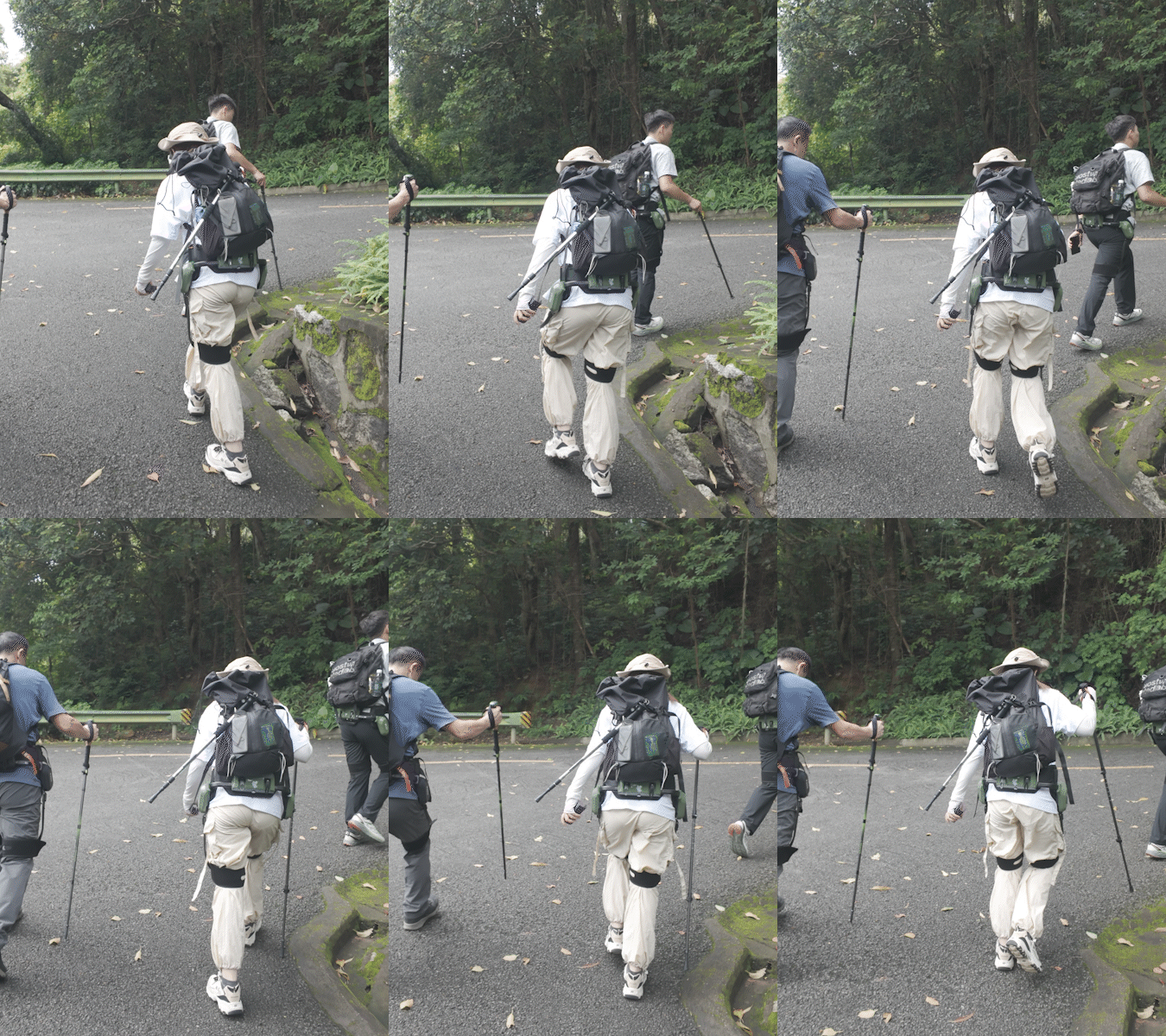
С включени устройства се изкачвахме по пътеката, почти забравяйки, че се катерим по безкрайна стълба. Други туристи постоянно спираха нас, за да попитат какво носим — наистина ли помага при изкачването? Че ако ние самите не го изпитвахме, можехме да се запитаме същото.
След като го изпробвахме лично, с радост споделяме нашите искрени впечатления. За продължителни изкачвания по стръмни склонове и дълги пешеходни маршрути AI екзоскелетът забележимо намалява натоварването върху краката ви. Според техническите данни на продукта той може да увеличи помощта за краката до 50 % и ефективно да намали физическото усилие, което прави цялото изкачване значително по-лесно и по-управляемо.
04 Мислехме, че стъпалата ще бъдат най-трудната част — после дойде пороят
Ако първата половина беше насочена към тестване на устройството, втората половина се превърна в тест както на устройството, така и на хората, които го носят.
На около половината път решихме да спрем за кратко в малък павилион преди склона Хаохан, за да похапнем и да си възстановим силите, след което да се отправим към върха с един последен решителен ритъм.
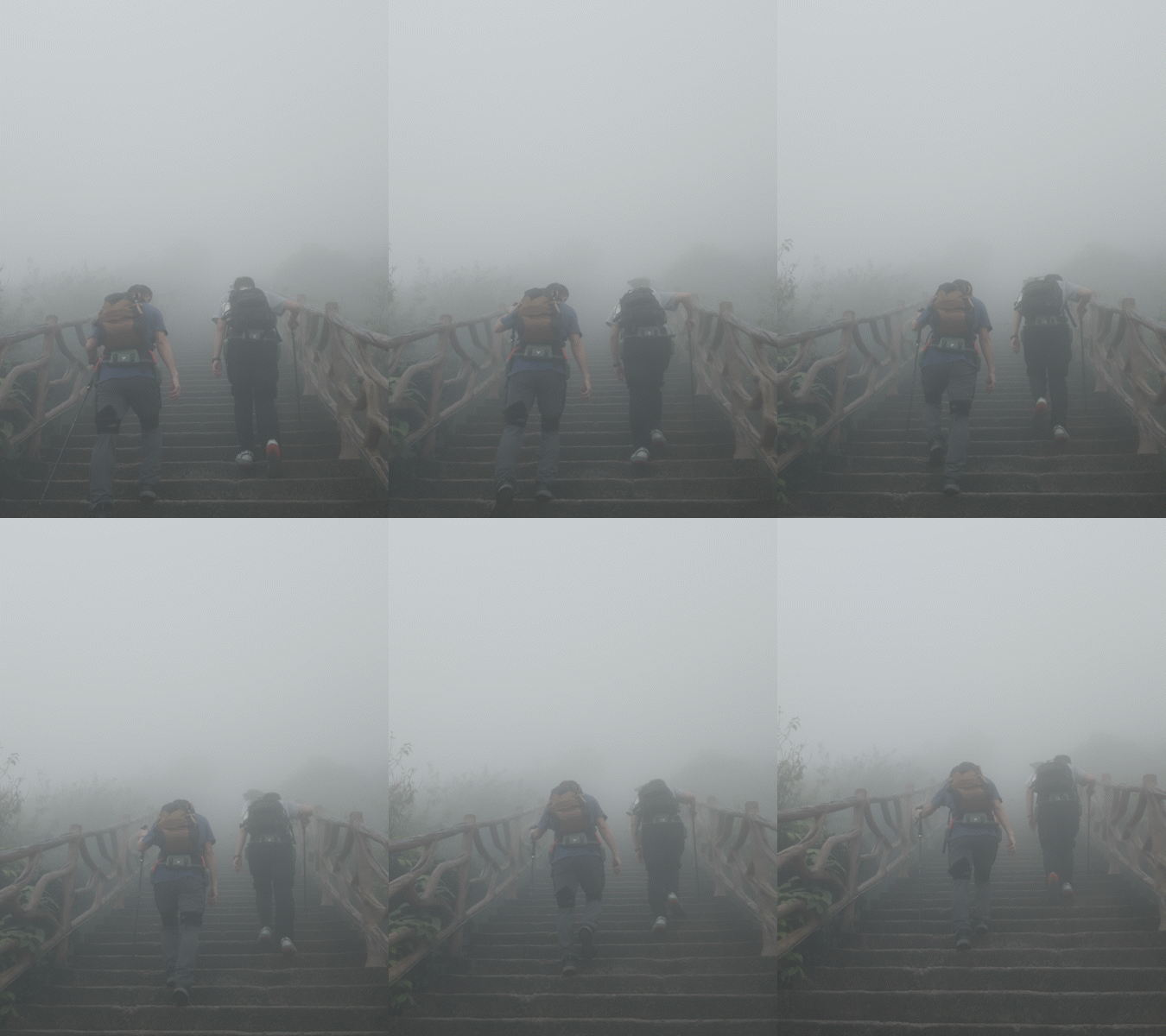
Точно когато се наслаждавахме на храната си, небето се разтвори. Вече мрачното време се влоши още повече и едва виждахме пътя пред нас. За щастие пороят продължи само около десет минути. Щом премина, облякохме отново оборудването си, сложихме раниците на раменете си и продължихме напред.
05 Дъждът ставаше по-силен — и нашата решимост също
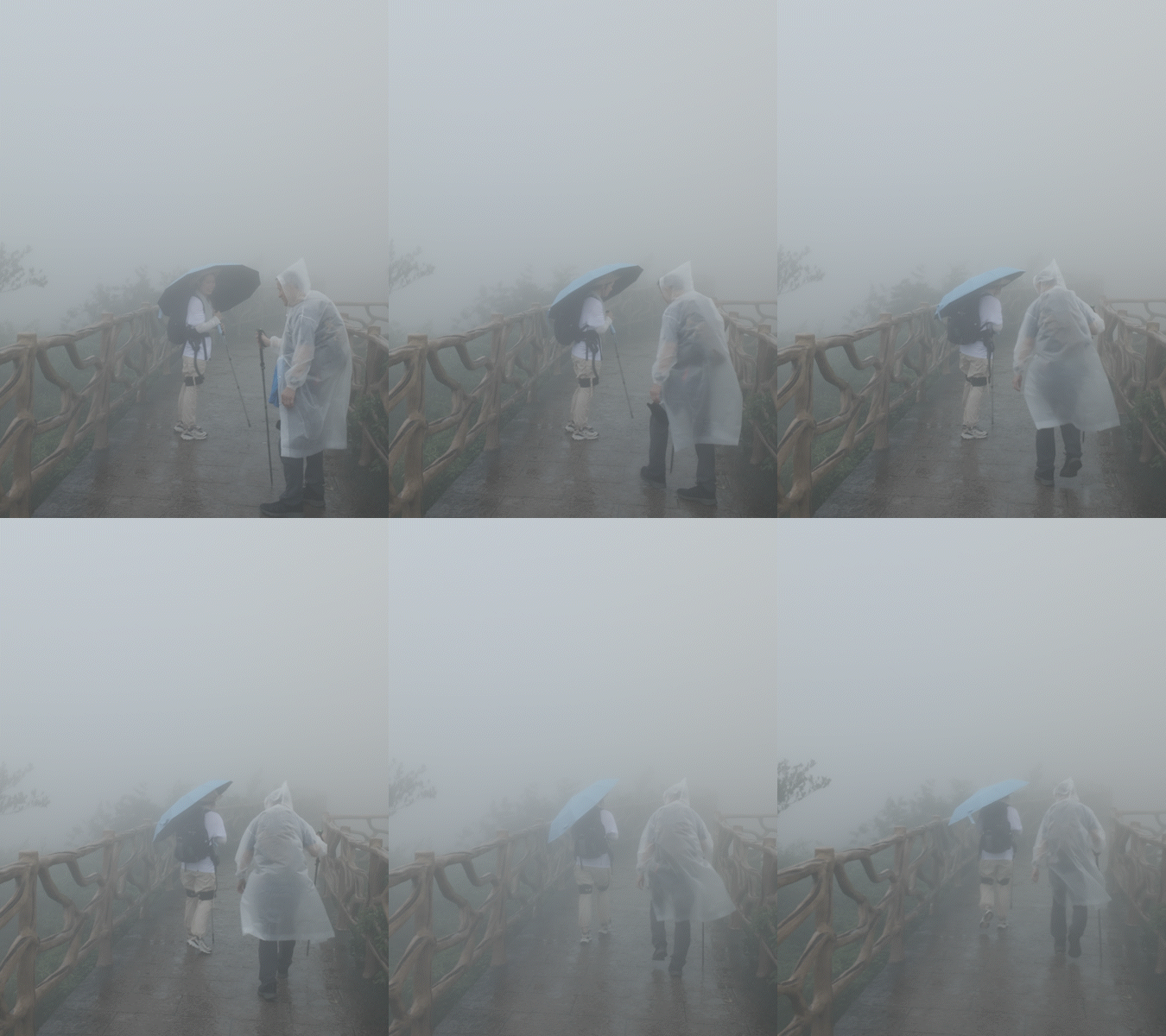
Но едва бяхме изминали 300 метра, когато дъждът отново ни застигна без предупреждение. Четиримата ни се разбързахме да отворим чадъри или да облечем дъждобранове.
Истината е, че дъждът ни хвана напълно неподготвени. Дъждобрановете и чадърите не можеха да попречат на обувките и панталоните ни да се намокрят. През завесата от дъжд мъглата се въртеше около нас като нещо от приказка — но това означаваше също, че видимостта бързо намаляваше и пътеката ставаше все по-хлъзгава с всяка минута. Затвърдихме се и продължихме напред с още по-голяма предпазливост.
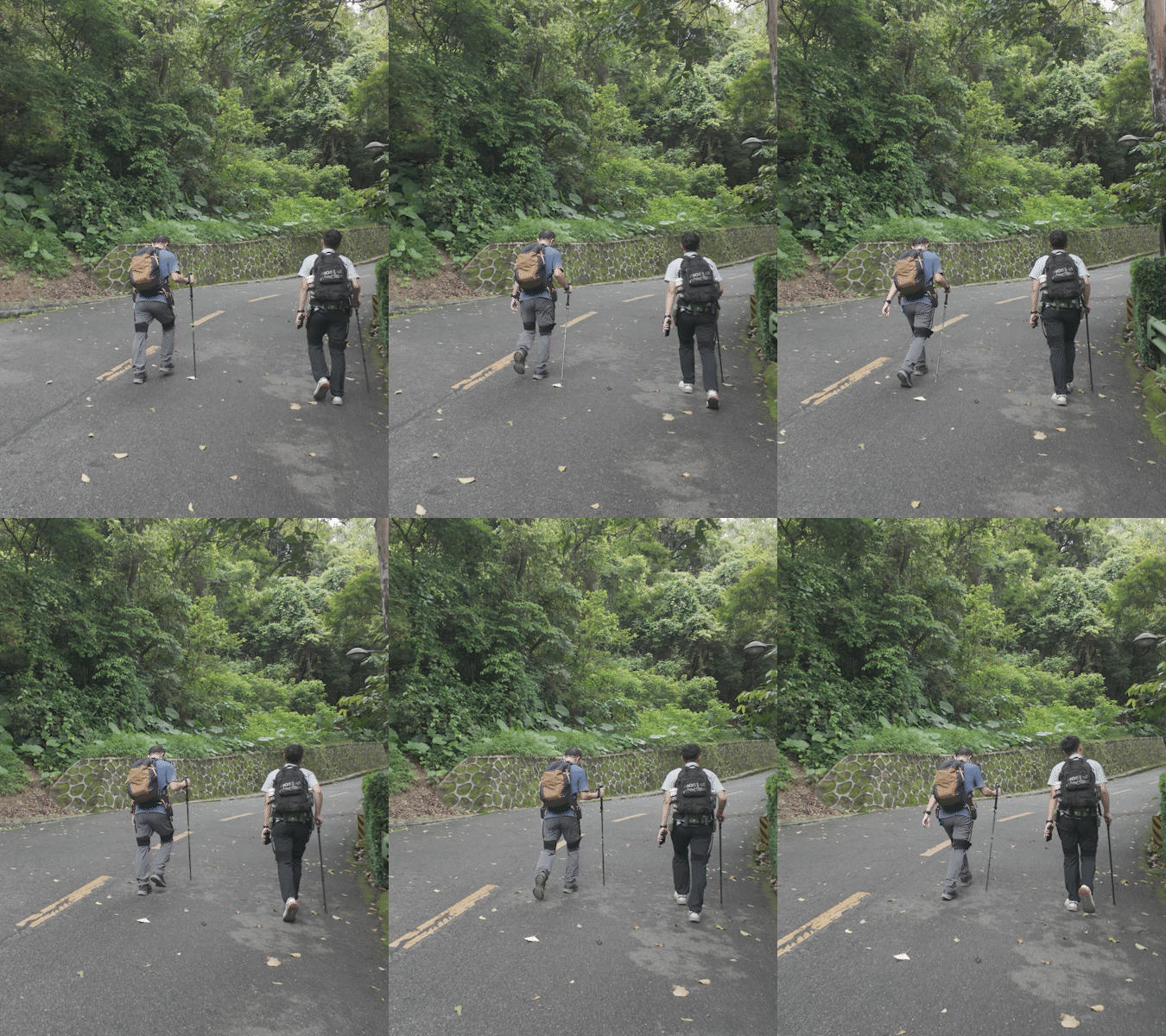
Изведната буря увеличи трудността на няколко нива. И все пак, благодарение на постоянната помощ от AI екзоскелета, дори не помислихме да спрем.
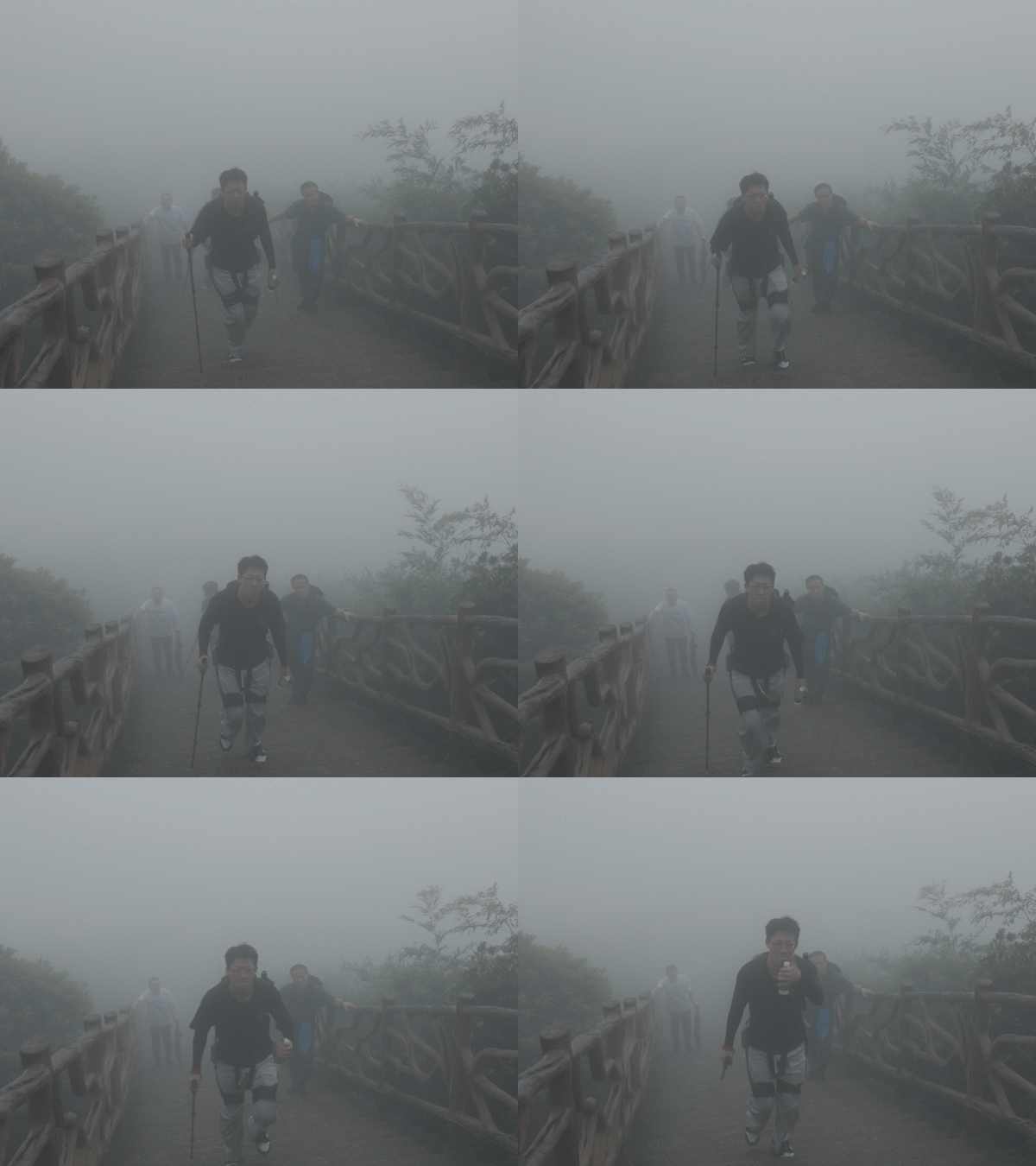
Пътешествието пеша под порой има нещо героично и почти трагично романтично. Дъждът се стичаше от ръбовете на нашите дъждобранове; шумът на потоците долу се смесваше с трополенето на дъжда по листата. Навън, в онази безкрайност, четиримата ни усетихме по-дълбоко чувство за сплотеност — обща решимост, че няма да се наречем истински планински алпинисти, докато не стигнем върха.
Синтянь непрекъснато напомняше на всички да внимават къде стъпват. Проверявахме и препроверявахме водонепроницаемостта на устройствата на всеки един от нас. В онзи момент колегите се превърнаха в бойни другари.
06 Достигане на върха на Фейюн Пик: Изпитанието получи своя отговор
След повече от четири изтощителни часа най-сетне достигнахме върха на Фейюн Пик — с вятър, дъжд и всичко останало. Бяхме напълно мокри от смесица от пот и дъждовна вода и изглеждахме напълно разрошени. Но вятърът, който ни посрещна на върха, носеше възбудата от победата.
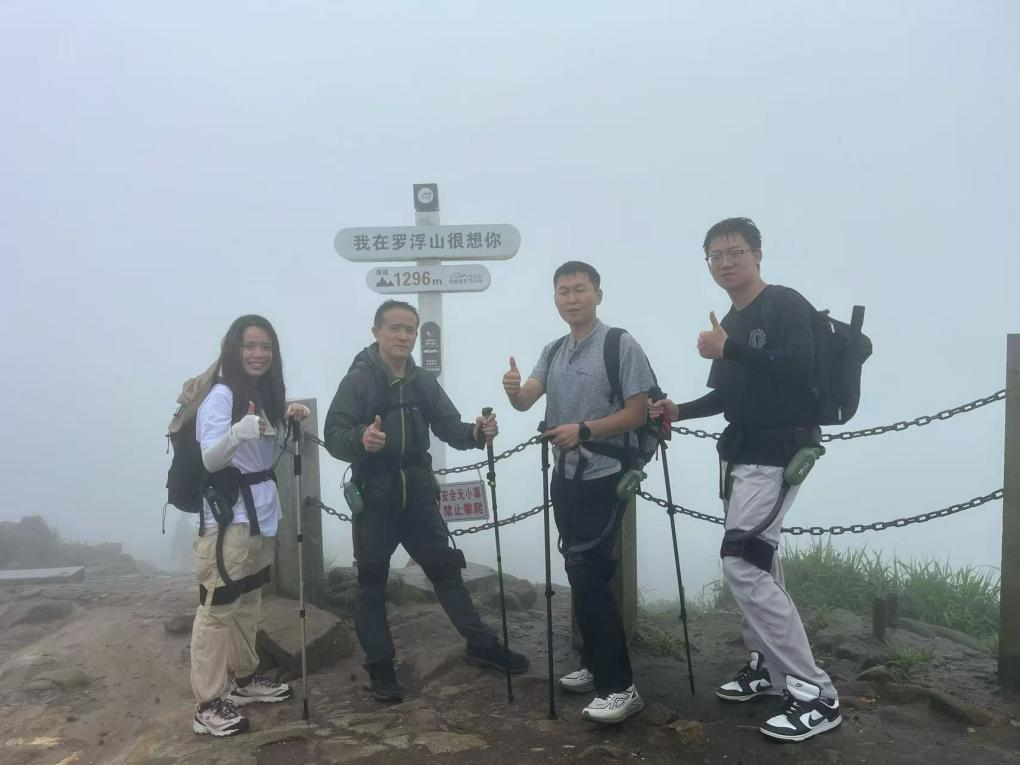
Най-сетне, преодолявайки дъжда, направихме групова снимка пред каменния знак „Фейюнь Пик“. Без внимателно нанесена гримировка — само най-искрените и ослепителни усмивки, измити от дъжда.
Повече от просто данни: какво ни даде този опит
Поглеждайки назад, това, което спечелихме онзи ден, беше далеч повече от данни.
AI екзоскелетът намали тежестта на изкачването, а спътниците до нас добавиха топлина, която дъждът никога не би могъл да измие.
В сурово време се грижехме един за друг, напомняхме си взаимно да се пазим и никой не избра да спре. Устройството издържа теста на истинските планински пътеки, а екипът работи в безупречна координация.
Сам, можеш да се движиш бързо. Заедно, можеш да стигнеш далеч.
Луофу Планина под дъжда стана свидетел на този изключителен лятен опит.
За Plankexa всеки истински полеви тест не е само въпрос на валидиране на продукта — той е и възможност за неговото непрекъснато подобряване. Лабораторните данни са важни, разбира се. Но истинските отговори винаги се намират по истинските пътеки, при истинско време и при всяка истинска стъпка.
Този път оставихме нашия отговор на планина Луофу.