Why Everyone May Need an AI Exoskeleton in the Next Decade
Time : 2026-07-02
Abstract
AI, robotics and smart wearable are rapidly converging, and AI exoskeletons are stepping out of labs and into everyday life for ordinary people. Far from being medical devices, they represent an entirely new category of athletic gear. This article will offer you a fresh perspective on AI exoskeletons and break down why they are set to emerge as a major trend over the next decade.
Have you noticed how countless new tech gadgets have woven themselves into our daily lives in recent years?
Robot vacuum cleaners were once dismissed as mere toys for the lazy, yet they are now a household staple in countless homes. AI smart glasses have evolved from conceptual prototypes into mainstream consumer goods. Smartwatches and fitness bands, meanwhile, are completely redefining how we track and manage personal health.
Nearly every wave of technological innovation sparks the same lingering question:
Does this thing actually work?
Now that AI exoskeletons are popping up everywhere—at consumer electronics expos, scenic spots, hiking trails, and all over social media—many people are asking two key questions:
What exactly are they? And why have they suddenly gained so much traction?
Some categorize them as robots. Others write them off as medical equipment. A third group sees them as nothing more than high-tech playthings for a tiny niche crowd.
The truth is, all of these perceptions only scratch the surface of what AI exoskeletons truly are.
What truly deserves our attention isn’t just how cutting-edge the technology is. It’s the simple, universal human function they’re transforming: walking.
Moving beyond lab testing and industrial deployment to reach everyday consumers, AI exoskeletons are ushering in an entirely new era. And this is likely only the beginning.

01 The Trend Is Already Taking Shape
AI exoskeletons have not emerged out of nowhere; they are an inevitable product of societal and technological advancement.
Over the past two decades, technology has reshaped how humans interact with the world around them.
Smartphones put instant information within arm’s reach; new energy vehicles have revolutionized intelligent mobility; large AI models have enabled genuine two-way communication between humans and machines.
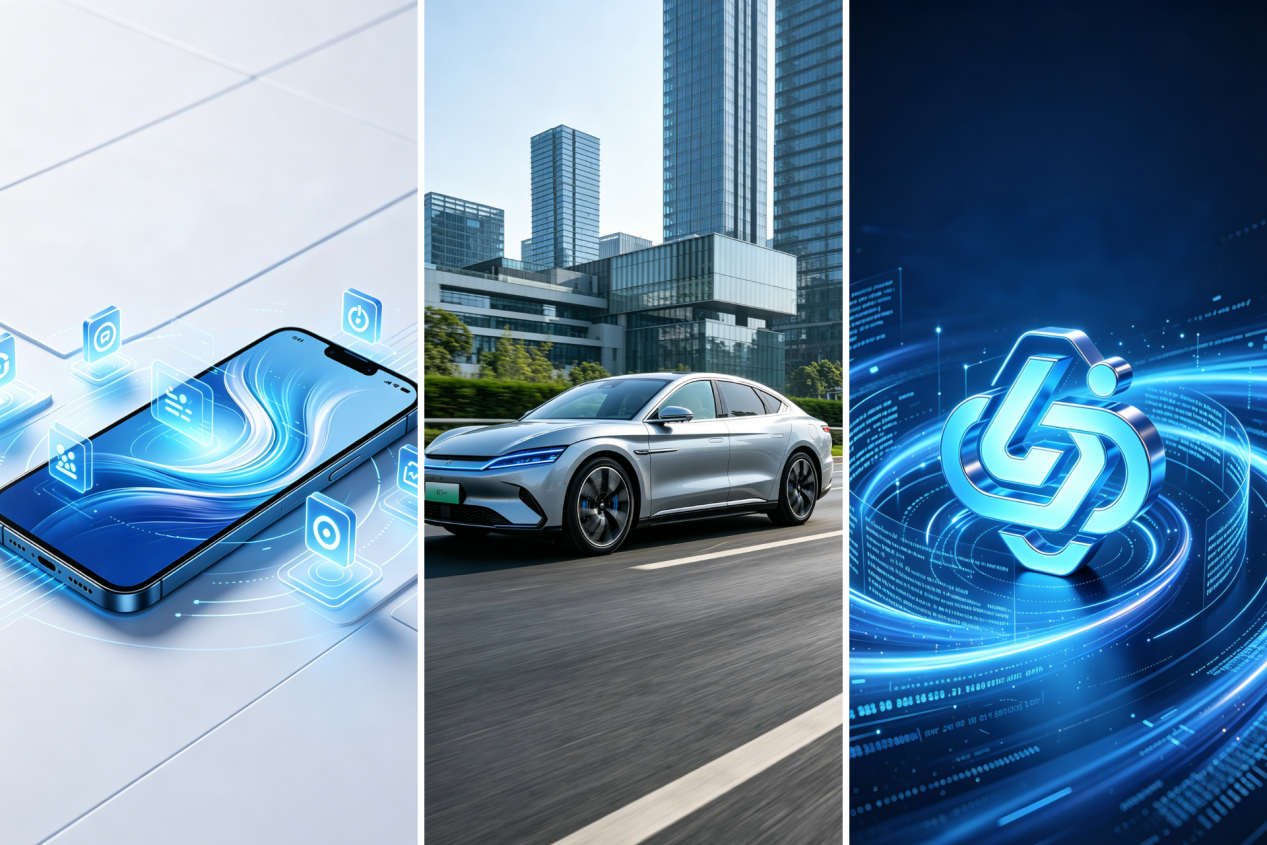
So what will be the next frontier redefined by AI?
Across countless industries, one answer stands unanimous: the human body.
In recent years, consumer electronics, robotics, artificial intelligence and smart wearable technologies have continued to converge, carving out a brand-new market segment: consumer-grade AI exoskeletons.
Exoskeletons were once largely confined to specialized fields such as industrial manufacturing and medical rehabilitation. Their bulky frames and prohibitive price tags long kept them out of reach for everyday consumers.
Thanks to maturing lightweight materials, AI algorithms, battery technology and sensors, however, a new generation of AI exoskeletons has undergone a full transformation.
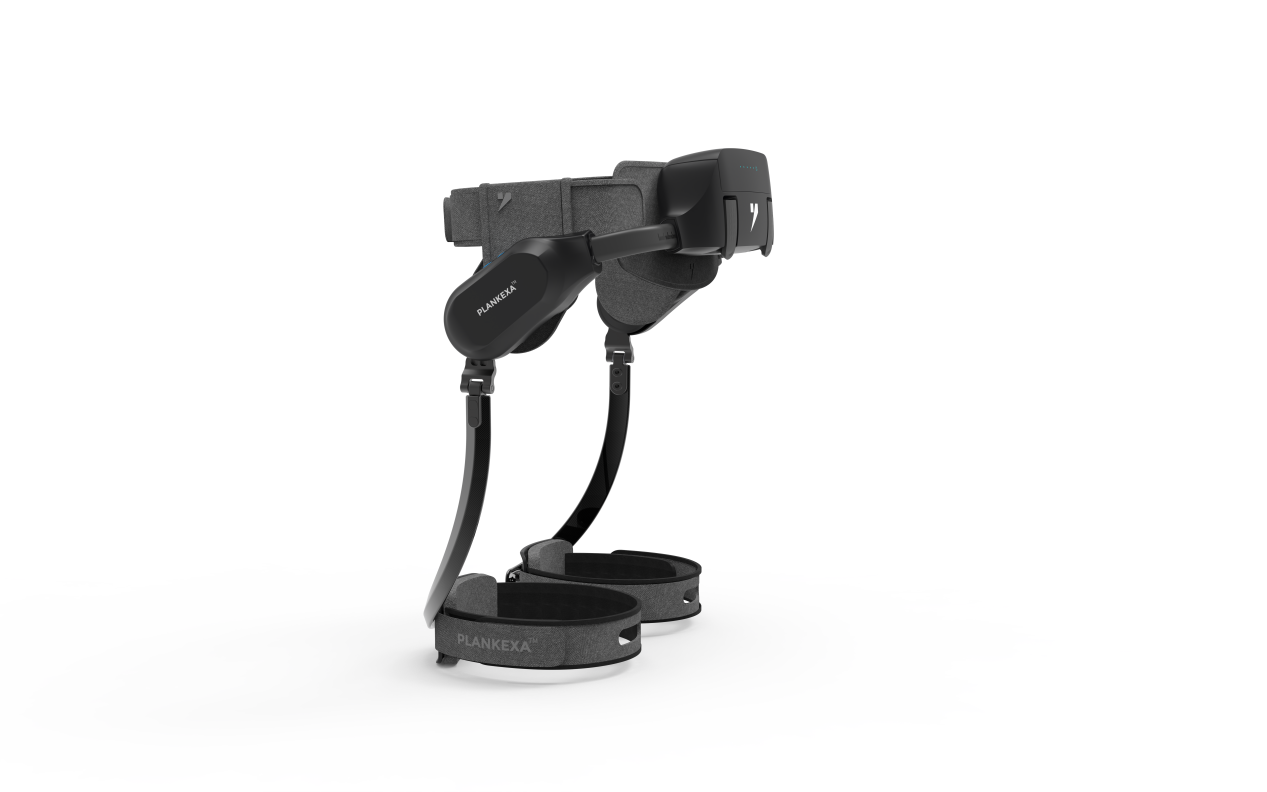
No longer clunky mechanical contraptions, they function more like wearable smart athletic gear.
If smartwatches empower people to better understand their bodies, AI exoskeletons go a step further—they physically augment what the human body is capable of accomplishing.
The ultimate trajectory of technological advancement has never been to replace humans, but to amplify human capabilities.
AI exoskeletons are a groundbreaking product born directly from this prevailing shift.
02 Health-Related Physical Concerns
Age is not what truly holds people back from exploring the world — it’s fading physical stamina that can no longer keep up.
Outdoor activities have surged in popularity over recent years.
More and more people take up hiking, mountain climbing, cycling and camping to relieve stress and reconnect with nature.
At the same time, a harsh reality has caught growing public attention:
Why does it take so much longer to recover from physical exertion these days?
Most people can relate to this experience.
When they were younger, walking 20,000 to 30,000 steps a day felt effortless.
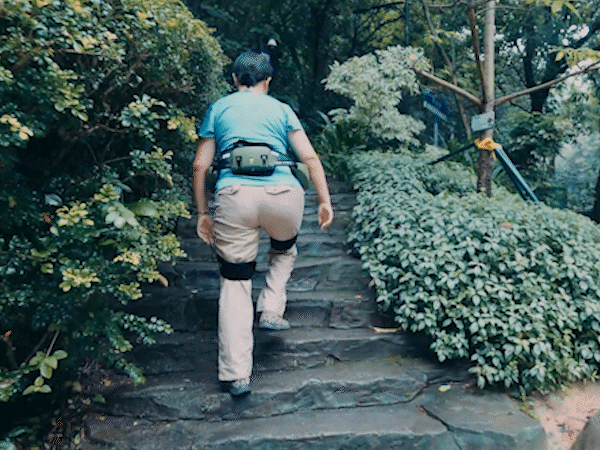
Nowadays, a single trip leaves legs so sore the next morning that they can barely walk down stairs. After a mountain hike, knees ache for days on end. When traveling with elderly parents, the biggest worry is never the scenic spots, but whether they have enough strength to finish the whole route.
Many attribute this decline simply to aging.
More precisely, however, it stems from a mismatch between physical athletic capacity and bodily strain.
Modern work routines lock most people into sedentary lifestyles. They get little regular exercise yet aim to tackle lengthy, strenuous outdoor trips during their limited vacation time.
This has sparked a widespread pursuit of a solution:
Is there a way to cut physical energy expenditure while covering greater distances?
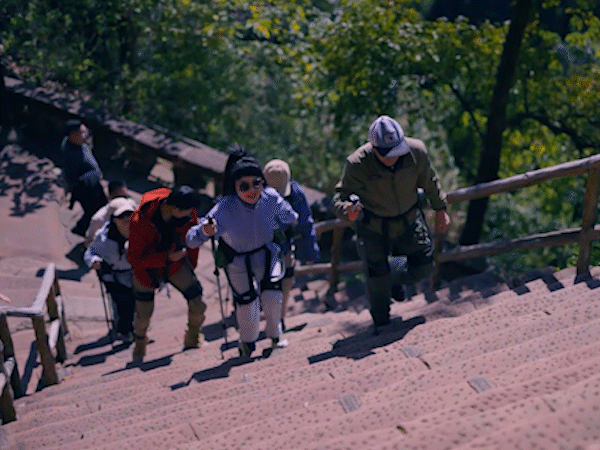
People have continuously upgraded their outdoor gear to meet this demand — from trekking poles and sports watches to professional running shoes and hardshell jackets.
AI exoskeletons represent the next evolution of performance outdoor equipment.
 |
 |
 |
 |
What will truly gain mainstream traction in the future won’t necessarily be gear that makes you faster or stronger—it will be gear that lets you move with far less effort.
As more people prioritize physical stamina management, AI exoskeletons are shifting their identity from cutting-edge tech gadgets to everyday athletic equipment.

03 A Shift in Public Perception
Most people’s first thought upon hearing the term “exoskeleton” is hospital rehabilitation, yet the largest market of the future will likely lie squarely in outdoor recreation.
This is the biggest misconception surrounding consumer-grade AI exoskeletons today.
When the word “exoskeleton” first comes up, many picture medical rehab equipment, industrial lifting machinery, or even sci-fi mech suits from blockbuster films.
But consumer AI exoskeletons are being developed for an entirely different purpose.
They are not designed to replace human athletic capability. Instead, they deliver natural, continuous physical support during long-distance walking, hiking, mountain treks and load-carrying trips.
Nor are they made exclusively for people with special physical needs.
They are equally essential for everyday enthusiasts who embrace life to the fullest.
These lovers of hiking and travel crave longer, more challenging trails. They pay close attention to post-workout recovery and are willing to invest in gear that elevates their outdoor experience.
For them, an AI exoskeleton is far from a medical device — it is cutting-edge equipment built to enhance their time outdoors.
A hardshell jacket will not climb a mountain for you, nor will trekking poles carry you along the trail.
An AI exoskeleton does not take over your physical activity either.
It simply lowers the physical toll of movement: cutting your required exertion down to 70%, 60%, or even less.
What you conserve is not just bodily strength.
It is the courage to keep venturing out and discovering the world.

04 What Exactly Is an AI Exoskeleton?
It does not walk in your stead; it simply lightens your physical burden whenever you need support the most.

To sum up what an AI exoskeleton is in one simple sentence:
It is wearable gear that detects your body’s movements and delivers intelligent power assistance.
It will not take control of your motions like sci-fi movie robots, nor will it do all the exercise on your behalf.
A truly premium AI exoskeleton achieves one core goal:
It feels virtually invisible to the wearer.
It boosts your upward force while climbing slopes, continuously eases strain on your legs during long walks, and conserves your physical energy when you hike carrying heavy packs.
This support does not come as sudden surges of power, but as smooth, steady, comfortable assistance that blends naturally with your movement.
Users rarely fixate on its complex algorithms. What sticks with them is an honest, straightforward feeling:
“I covered so much ground today, yet I’m nowhere near as worn out as I used to be.”

05 Who Actually Needs an AI Exoskeleton?
You don’t have to wait until mobility becomes a struggle to own one — it’s meant for everyone who still wants to explore the world.
When people first learn about AI exoskeletons, they always ask the same question:
“I’m perfectly fit right now. Do I really need this?”
This line of thinking echoes a common question from over a decade ago:
“I already have a broom, so why would I buy a robot vacuum?”
Consumer habits have never been reshaped by whether a product is essential, but by whether it’s worthwhile. The same logic applies to AI exoskeletons.
It doesn’t solve the problem of being unable to walk; it simply makes walking far less taxing.
So who stands to benefit the most?
First, outdoor enthusiasts.
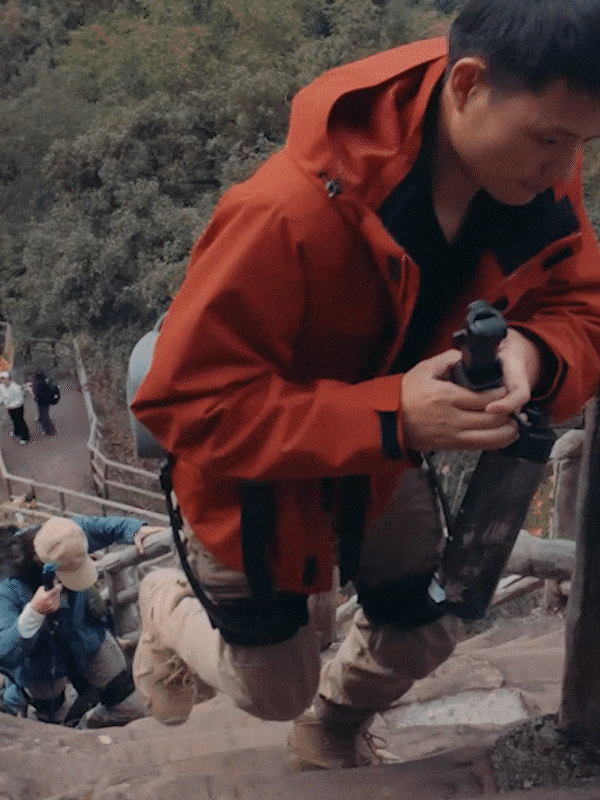
They will start hiking at 3 a.m. just to catch the sunrise, and trek dozens of kilometers carrying gear weighing over ten kilograms.
They are physically capable of finishing the journey, yet they want to save their stamina to soak in the scenery, rather than waste all their energy on the grueling hike itself.
 |
 |
Second group: avid travelers.
The biggest regret of traveling is never a lack of time, but insufficient stamina to keep up with your itinerary.
Countless visitors end up skipping spots they’ve been eager to see simply because their legs grow sore and their knees ache halfway through sightseeing.
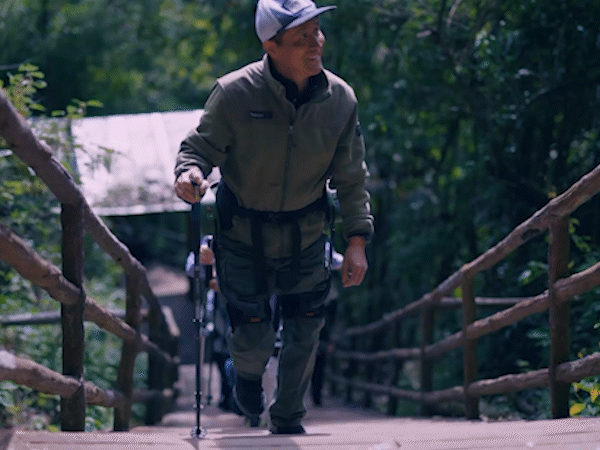
An AI exoskeleton conserves much of your physical strength, letting you cover extra kilometers and visit more attractions in a single day. The value it delivers stretches far beyond mere physical support.
Third category: people who travel with their families.
More and more young adults take their parents on trips these days.
Their biggest worries are not unavailable hotel bookings or shifting weather conditions, but whether their parents have enough stamina to complete the entire route.
If technology can help elderly family members walk farther and enjoy outings longer, it opens up countless new opportunities for quality family time.

Fourth group: health-conscious individuals.
A growing number of people view regular exercise as a long-term investment in themselves.
They splurge on premium running shoes, sports watches and hardshell jackets not merely to upgrade their gear, but to make workouts easier and safer on their bodies.
AI exoskeletons fall squarely into this next generation of athletic equipment.
They do not replace physical activity — they enhance it.

In the future, people will not buy AI exoskeletons because they struggle to walk.
Instead, they will choose them for one simple reason: to venture farther on every outing.

06 Why Now Is the Perfect Moment for AI Exoskeletons to Enter Mainstream Life
Every wave of consumption upgrading is driven by two joint forces: maturing technology and surging market demand.
Nearly every new tech product follows the same growth trajectory.
At first, they serve only a small group of professional users;
then, as underlying technology matures, they break into the mass consumer market;
ultimately, they become an inseparable part of daily life.
Smartphones, robot vacuums, smartwatches — all fit this pattern.
AI exoskeletons are now walking the exact same path.
On one hand, breakthroughs in core technologies including AI algorithms, lightweight composite materials, and battery endurance have made these devices lighter, more comfortable, and fully accessible to everyday consumers.
On the other hand, people’s desire for healthy lifestyles, outdoor recreation, and premium travel keeps growing stronger.
More shoppers are willing to pay for effortless journeys and elevated outdoor experiences.
At its core, consumption upgrading is never about buying pricier goods — it’s about purchasing a superior experience.
Riding this very trend, AI exoskeletons are gradually transitioning from specialized industrial and medical hardware into mainstream athletic gear.
For consumers, they are far more than a piece of futuristic tech; they represent an entirely new way of living.

07 Plankexa: Making AI Exoskeletons the First Futuristic Athletic Gear for Everyone
Great technology should never feel out of reach—it should be something people are eager to slip on.
From day one, Plankexa has stayed laser-focused on one mission:
developing a new generation of lightweight AI exoskeletons built exclusively for outdoor adventures.
Unlike conventional exoskeletons engineered primarily for industrial workloads, Plankexa prioritizes real-world user experience above all else.
Its lightweight frame delivers a seamless, natural fit;
AI-powered intelligent assistance takes the strain out of every stride;
ergonomic, body-hugging construction makes it feel like athletic apparel, not clunky machinery.
To date, Plankexa AI exoskeletons have been deployed at dozens of scenic spots nationwide, with over a million trial experiences completed.
Countless people have gotten their first taste of how this technology redefines outdoor mobility.
What sticks with most users is not a long list of technical specs, but one simple, heartfelt feeling:
“I really didn’t get nearly as worn out as I usually do today.”
The true purpose of technology is never to flaunt its innovation—it’s to transform human experience.
The future is not one where robots replace humans.
It is a future powered by AI, where everyone can travel farther on their own two feet.
Closing Thoughts
Age should never put an end to our urge to explore.
The future worth looking forward to is not one where robots take every step for us. It is a world where every journey begins with lighter legs, longer ranges, and greater freedom.
AI exoskeletons may not reshape the entire globe, but they can revolutionize how countless people connect with the world around them.
Save your stamina for the scenery;
let technology bear the burden.
That is exactly why plankexa has dedicated itself to creating lightweight AI exoskeletons.